Social organisations specialising in fuel poverty are calling on the government to take measures to provide greater coverage for households affected by the DANA
The organisations consider that the measures proposed so far are insufficient and call for a protocol to be drawn up to cover emergencies caused by extraordinary weather events.
26 Desember de 2024 – The organisations specialised in fuel poverty Aeioluz. Cooperativa de servicios energéticos CyC, Intiam Ruai, Asociación Socaire, Traza Consultoría, Amigos de la Tierra, Plataforma por un Nuevo Modelo Energético, Asociación Ecoserveis, Asociación Ecoserveis, Energía Bonita, Ecodes, Red Agua Pública, Alianza contra la Pobreza Energética, Enginyeria Sense Fronteres, Ecooo Energía Ciudadana S. Coop, Greenpeace España, Fundació Comunitària Horta Sud, Consejo General del Trabajo Social, Col-legi Oficial de Treball Social de València, Col-legi Oficial de Treball Social de València, La Corriente, Sdad. Coop., and Mercado Social de Madrid have joined forces to ask the Spanish Government for measures to be applied immediately to households affected by the DANA 2024 and to form part of an action protocol established in emergency situations to protect households in the short, medium and long term.
These proposals have already been sent to the Ministries of Ecological Transition and Demographic Challenge and to the Ministry of Social Rights and Agenda 2030 on 24 November 2024, without these entities having received, to date, any communication in this regard.
The requested measures are:
1. The possibility of accessing the social voucher for electricity in the severe vulnerable consumer category, for all domestic consumers in the localities declared areas seriously affected by the DANA or, where appropriate, consumers whose main economic activity is affected by the damage in these areas.
2. The extension of this consideration of severe vulnerable consumer to persons who, without being holders of the supply contract, can accredit that they have a rental contract and/or reside in a dwelling affected by the FOD, which will entail the automatic change of ownership of the supply contracts in the name of the applicant.
3. Access to the payment of the Bono Social Térmico corresponding to 2024 for anyone who has been considered affected by the DANA and is a beneficiary of the Bono Social Eléctrico, even if it comes into force after 31 December 2024.
4. The promotion of parallel measures to support cooperative electricity distributors in the affected area so that the extension of the social tariff requested above does not jeopardise the continuity of their activity, and so that they can offer a sufficiently competitive tariff to guarantee the best possible service to their affected users.
5. The creation of a simple and direct channel with the reference marketers and cooperatives in the affected area to process this aid directly (e-mail and specific telephone number). Seeking the simplest possible formula, unifying procedures as has been done with state aid that includes a responsible declaration.
6. The extension of these measures until 31 December 2025, similar to the other aid measures promoted by the Government in Royal Decree-Law 6/2024, of 5 November, adopting urgent response measures to the damage caused by the Isolated High Level Depression (DANA) in different municipalities.
Floods 2024
After more than a month and a half since the events caused by the adverse effects of the storm of 29 October 2024, the consequences of which we are all aware and which has affected several autonomous communities in Spain, the Government published Royal Decree-Law 7/2024 of 11 November, adopting urgent measures to promote the Immediate Response, Reconstruction and Relaunch Plan to deal with the damage caused by the Isolated High Level Depression (DANA) in different municipalities between 28 October and 4 November 2024. It proposes measures to protect against supply cut-offs, the easing and temporary suspension of affected electricity and gas contracts and the deferral of bills.
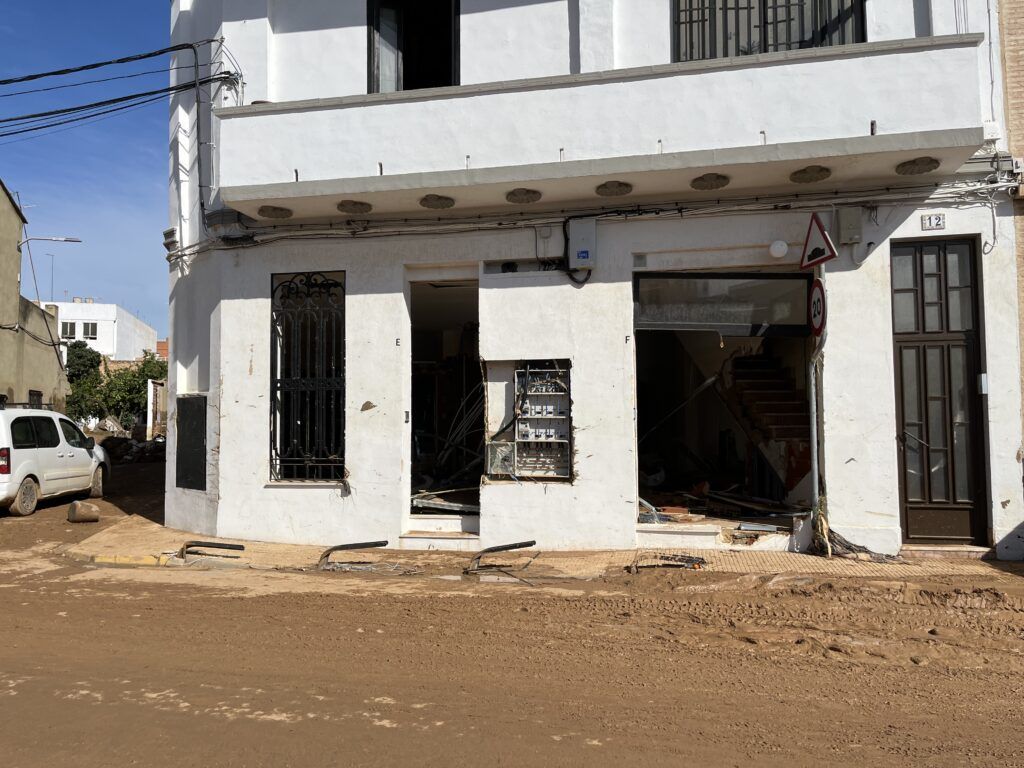
All these measures are necessary to deal with the emergency situation in which economic activity has been paralysed and, above all, in which a large number of homes have been affected and rendered uninhabitable, forcing many families to be evicted from their homes with no clear prospect of when they will be able to return to them.
Organisations specialising in actions against Fuel Poverty believe that these measures are insufficient to tackle the reconstruction and relaunching of the social and productive fabric, and that medium-term measures are needed to ensure that the energy expenditure necessary to re-establish life in the municipalities can be met.
Without these complementary measures, the number of people who will find themselves in a situation of vulnerability and energy poverty will increase considerably, with the consequences for physical and mental health and social deterioration that we are aware of and which most intensely affect the most vulnerable population groups (households with minors, households with people over 65 years of age and the migrant population).
Aware that these emergency situations will continue to occur with increasing frequency and learning from previous extreme events (Covid-19, Lorca earthquake, La Palma volcano, Filomena cold wave…), they propose a series of measures for direct application in emergency situations complementary to those set out in Royal Decree-Law 7/2024, which is currently in force.
The measures requested have been presented to the Government without detriment to the consideration that the most appropriate solution, demanded by many of the undersigned social organisations that work day by day to eradicate energy poverty, is to automate access to the Social Bonus, given that the current access system has serious shortcomings, as reflected in a report by EsadeEcPol and Oxfam Intermón, dated September 2024, in which it is reported that almost 8 out of 10 potential beneficiaries do not receive the social bonus. The organisations understand that the emergency measures they are proposing should not be detrimental to small distributors, the majority of which are electricity cooperatives in the affected area.
Other interest news

Join the ‘Salvem las Fotos’ volunteer initiative to help preserve the collective memory and heritage of l’Horta Sur
[…]